












The Stages of Contract Management
CLM software is intended to take the headache out of contract design, development, and execution. Here are the stages of contract management.

Table of Contents
- What is contract lifecycle management?
- Why understanding contract management stages matters
- Stage 1: Contract request and planning
- Stage 2: Creating and collaborating
- Stage 3: Contract review and approval
- Stage 4: Contract signature and execution
- Stage 5: Storing and managing contracts
- Stage 6: Performance monitoring and obligation tracking
- Stage 7: Contract renewal and termination
- How technology streamlines contract management stages
- Optimizing your contract management process
- Frequently asked questions about contract management stages
Want more content like this? Sign up for our monthly newsletter.
Key takeaways:
- Map your contract lifecycle stages to identify where deals slow down, where risk enters the process, and where manual tasks waste time, as poor contract management costs companies up to 9% of annual revenue.
- Implement contract lifecycle management software to eliminate the 92% of contract management errors caused by human mistakes, particularly version control issues and manual tracking that plague traditional processes.
- Focus improvement efforts on the review and approval stage, which typically creates the biggest bottleneck as multiple stakeholders provide feedback through disorganized channels like email.
- Start by fixing one problematic stage rather than overhauling your entire contract process at once, selecting the area causing the most delays or risk to your organization.
Ever wonder why contracts seem to disappear into a black hole for weeks, only to resurface with urgent signature requests? If you’re nodding along, you’re not alone. Most legal and operations professionals know the frustration of contracts that get stuck somewhere in the process, but they can’t pinpoint exactly where or why.
Here’s the thing: understanding the stages of contract management is one of the most practical ways to find those bottlenecks, reduce risk, and speed up your entire process. When you can see the journey a contract takes from initial request to final completion, you can start having real conversations about what’s working and what isn’t.
What is contract lifecycle management?
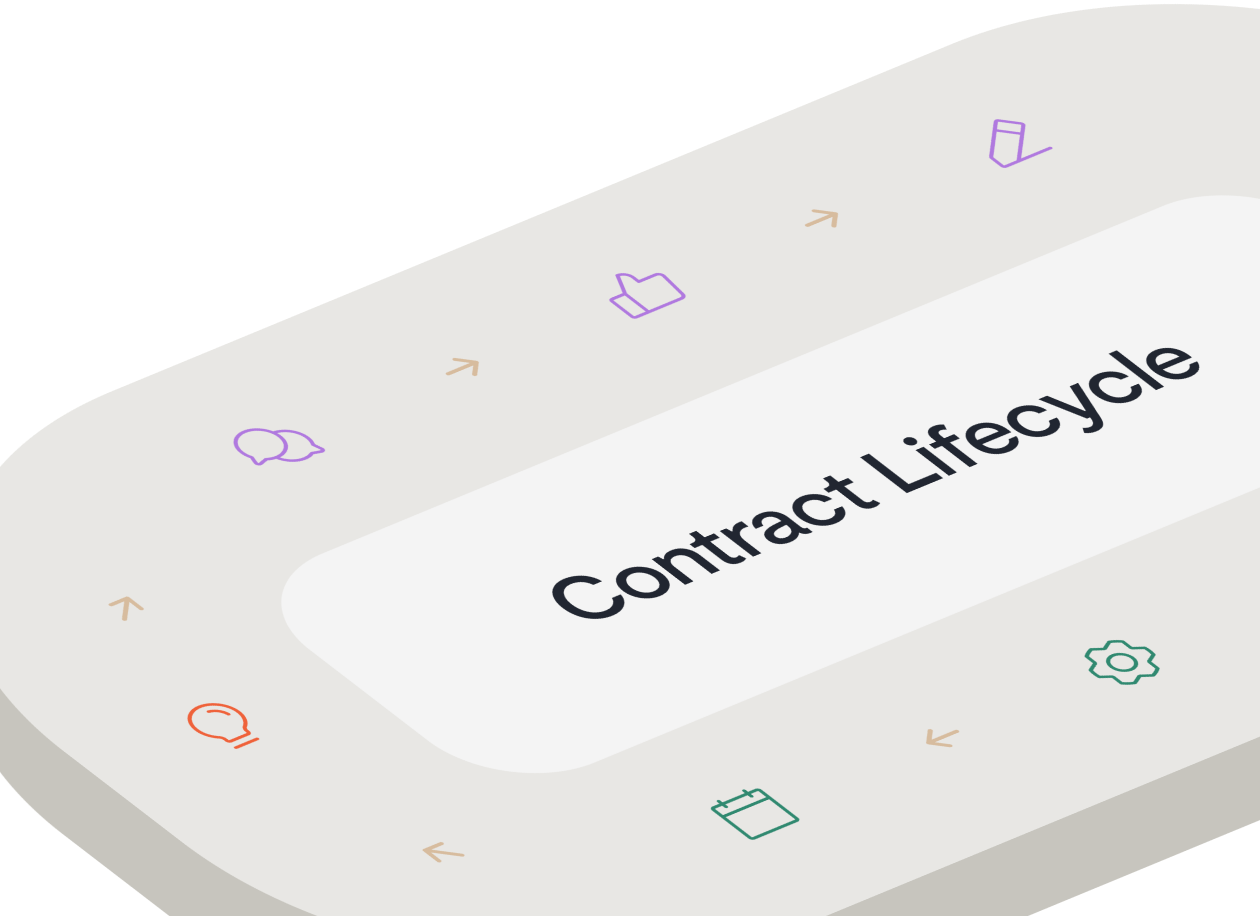
Contract management stages are the sequential phases a contract moves through from initial request to final completion. These stages typically include contract request and planning, creation and collaboration, review and approval, execution, storage, performance monitoring, and renewal or termination. Understanding these stages helps organizations move contracts faster while reducing errors and maintaining compliance.
Contract lifecycle management (CLM) software organizes and automates these stages. The software takes the manual work out of moving contracts through each phase, helping legal and business teams collaborate without duplicating efforts or losing track of versions.
Think about the typical frustrations you face: chasing down stakeholders for approvals, losing track of which version is current, or manually extracting key dates from signed contracts. CLM software addresses these pain points by creating a centralized system where all contract activity happens in one place.
Modern CLM platforms like Ironclad combine auditing, editing, redlining, and signing features into one system. This means everyone in your organization works on the same document, and it reaches the right people with all changes properly tracked and implemented.
For legal operations teams tasked with making the entire organization more effective, this technology shift is particularly valuable—the 2024 ACC Chief Legal Officers Survey found 45% of CLOs plan to invest in new technology to do just that. Instead of spending time on manual tracking and version control, lawyers can focus on the substantive legal work that actually requires their expertise.
Why understanding contract management stages matters
You can’t fix a process you don’t understand. When you break down contract management into distinct stages, you’re not just learning a definition—you’re creating a map of how work actually gets done at your company. This map shows you exactly where deals slow down, where risk creeps in, and where your team is wasting time on manual tasks. Considering that 92% of contract management errors are human errors, according to The 2025 Legal Operations Field Guide, identifying those manual friction points is critical. World Commerce & Contracting found poor contract management costs companies up to 9% of annual revenue.
Understanding these stages is the first step to improving them. It’s how you move from just keeping up with contract requests to actually making the whole process faster and safer for the business. And once you see the lifecycle clearly, you can start having real conversations with stakeholders about what’s working and what isn’t.
Now, you’ll see different organizations describe contract management using anywhere from five to nine stages. This variation exists because some models combine related activities while others break them into separate phases.
For example, some frameworks combine “review and approval” into a single stage. Others separate them because different stakeholders handle each activity. Similarly, some models include “performance monitoring” as a distinct stage while others consider it part of contract execution.
The number of stages matters less than ensuring your process covers all essential activities. Every contract should move through planning, creation, review, execution, storage, performance tracking, and eventual renewal or termination—whether you categorize these as five stages or eight.
Stage 1: contract request and planning
This is where a contract is born. Before any drafting begins, teams identify the need for an agreement, gather essential information, and outline the requirements. During this phase, teams identify the need for a contract, gather essential information, and outline requirements before drafting starts.
This stage involves several key activities. Teams research relevant regulations and compliance requirements. They identify stakeholders who need to review or approve the contract. They determine timelines for negotiation and completion. Getting this foundation right prevents delays and miscommunication in later stages.
A well-designed intake process makes all the difference here. Instead of chasing down basic details halfway through a negotiation, you’re gathering everything upfront—which template to use, what approval chain applies, and any special requirements for this particular deal.
Tools like Ironclad’s Workflow Designer help streamline this stage with customizable dropdown menus and fill-in text fields that capture all the necessary information from the start.
- Contract templates let you summarize the contracting request neatly, with dates and other options.
- You can define review and approval roles, listing who is responsible for approving a contract under specific conditions—especially useful when multiple people must sign off.
- Text blocks can be filled with larger segments of personalized language specific to your company’s contracts.
Stage 2: creating and collaborating
Now the contract starts to take shape. In this stage, teams draft the initial language and work together to refine the terms, which often involves the most back-and-forth as they negotiate specific provisions. This stage involves the most back-and-forth between parties as they negotiate specific provisions.
During traditional contract collaboration, multiple document versions create confusion. Different stakeholders add comments and revisions to separate copies. Even with timestamps, teams struggle to identify which version reflects the current state of negotiations.
Cross-platform compatibility adds another layer of complexity. When documents move between Word, WordPerfect, and PDF formats, formatting codes don’t always translate. Comments and edits can disappear or display incorrectly.
This is where modern collaboration tools make the biggest difference. Platforms like the Ironclad Editor let you create a contract workflow by uploading your template, tagging fields that need attention, and adding the right approvers and signers—all in one centralized location.
Modern contract collaboration tools solve version control challenges by maintaining a single source of truth. Everyone works in the same document simultaneously, eliminating confusion about which version is current.
Real-time collaboration features let teams discuss questions as they arise. Internal comments keep all discussion connected to specific contract language. Team members can loop in colleagues for immediate input without switching to email or chat.
Platform compatibility issues disappear when all work happens in a consistent format. Teams avoid the translation problems that occur when moving documents between different software applications.
The Ironclad Editor also allows users to accept or reject tracked/redlined changes and send them back to the proposer immediately, shortening the time between edits, and reducing the chance for missed changes and misunderstandings. This brings all of your teams together in one place, ensuring nothing gets lost or dropped during the collaboration process.
Stage 3: contract review and approval
Once the first draft is ready, it’s time for review. This is where the back-and-forth really begins. The legal team needs to check for risk, finance might need to weigh in on payment terms, and the business owner needs to confirm it meets their needs.
The goal is to get everyone’s feedback and approval without creating a dozen different versions of the document floating around in email. This stage is often the biggest bottleneck, especially when you’re manually tracking who has reviewed what and who needs to sign off next.
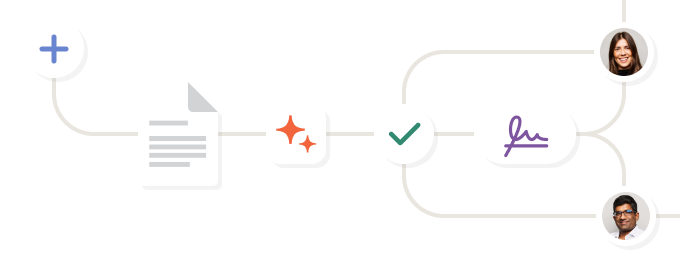
A streamlined approval workflow ensures the right people see the contract at the right time, without holding up the deal. And when you’re dealing with counterparty paper, AI can help flag deviations from your standard terms so you can focus your attention where it matters most.
Stage 4: contract signature and execution
This is the moment of truth, when a negotiated draft becomes a legally binding agreement through signatures. This stage transforms a negotiated draft into an enforceable contract.
Several signature methods exist depending on your contract type and requirements:
- An embedded contract contains the signature line within the body of the contract. The entire contract must be signed and sent in order to be valid.
- Clickwrap or clickthrough agreements are seen in terms of service agreements and other online user agreements. These are seldom seen for full contracts but are common for point-of-sale agreements.
- eSignature is the use of an electronic signature, often on a PDF document sent with an editable signature line. Services like DocuSign allow e-signatures to be done in conformance with court or government regulations.
- Wet signatures are the traditional pen-and-ink signatures placed on a document. They’re sometimes required on certain documents in some jurisdictions.
If a wet signature is required on a contract, the document needs to be sent by FedEx or messenger for signing. Otherwise, an electronic copy of the document usually suffices. In very few cases, some entities, such as the federal government, do not accept e-signatures for some documents. Check your local and federal requirements.
Stage 5: storing and managing contracts
The contract storage stage begins after execution, but it’s not the end of contract management. Storing signed contracts in an organized, searchable system enables the ongoing monitoring and management that follows.
Proper storage means more than just keeping contracts safe. Searchable storage lets you quickly find specific terms, dates, and obligations when needed. This capability becomes critical during the performance monitoring stage.
Modern contract repositories tag important metadata during storage. Key dates like renewal deadlines, payment schedules, and deliverable milestones become searchable and trackable. This organization transforms your stored contracts from static documents into active management tools.
Effective contract storage also supports distribution and access needs. Once contracts are executed, copies need to reach the right stakeholders securely. Modern systems can automatically distribute signed contracts to relevant parties and maintain secure access controls.
Platforms like Ironclad’s Data Repository exemplify this approach by maintaining contracts in whatever status you need while automatically flagging important dates like renewals and expirations. This type of searchable, accessible storage becomes the foundation for effective contract lifecycle management.
Stage 6: performance monitoring and obligation tracking
The contract is signed, but the work isn’t over. Now you have to live with it. This stage is about making sure everyone does what they promised. Are you getting the service levels you paid for? Is the vendor meeting their deadlines? Are you?
Tracking key dates, obligations, and performance metrics is critical. Without it, you’re flying blind and likely leaving value on the table or exposing the company to unnecessary risk. This is where contracts move from static documents to active business assets that ensure suppliers meet their commitments.
AI can help here by automatically extracting key obligations and dates from your contracts, so you don’t have to manually comb through every agreement to build a compliance calendar.
Stage 7: contract renewal and termination
All contracts eventually come to an end, one way or another. This final stage deals with what happens next. Will the contract auto-renew if you don’t act? Do you need to give 90 days’ notice to terminate? Or do you want to proactively renegotiate for better terms?
Managing renewals and expirations properly prevents unwanted automatic payments for services you no longer need and gives you the chance to reassess the relationship before committing to another term. It closes the loop on the entire lifecycle—and often kicks off a new one.
How technology streamlines contract management stages
Going through these stages manually with spreadsheets and email is a recipe for chaos. This is where technology, specifically a CLM platform, comes in—a market projected to reach $5.09 billion by 2034. At each stage, the right tools can eliminate manual work and reduce risk.
Technology integration supports every contract management stage by connecting your contract platform with tools your team already uses. These connections eliminate manual data entry and ensure information flows automatically between systems.
Integration matters most during three stages: During contract creation, integrations can pull data from your CRM to auto-populate agreement details. During execution, e-signature integrations streamline the signing process. During storage and monitoring, integrations with shared drives ensure contracts are accessible where your team already works. The most effective CLM platforms integrate seamlessly with the tools you’re already using:
The most effective CLM platforms integrate seamlessly with the tools you’re already using, like Google Drive or Dropbox for storage and DocuSign for e-signatures.
Self-service forms streamline intake. Templates and clause libraries speed up drafting. Automated workflows handle approvals so nothing gets stuck. A central, searchable repository makes finding contracts instant. And AI can now help review third-party paper and flag risks in minutes, not hours. The point of the tech isn’t just to connect tools; it’s to make every single stage faster and more intelligent.
Optimizing your contract management process
Understanding contract management stages helps you identify bottlenecks and improvement opportunities. When you can see where contracts get stuck, you can implement targeted solutions for each phase.
The most successful organizations use technology to support every stage. In fact, organizations using Ironclad CLM see an average 55% improvement across value metrics, according to The 2025 Contracting Benchmark Report. Automated workflows move contracts through review and approval faster. Centralized repositories make storage and monitoring effortless. Integration with existing tools eliminates manual data entry across stages.
You don’t have to fix everything at once. Pick one stage that’s causing the most pain—maybe it’s the review bottleneck—and focus on improving it. Map out your current process, identify the friction points, and take steps to master your contracts.
Ready to see how modern CLM technology streamlines every contract management stage? Request a demo today to learn how Ironclad can help your team move contracts faster while maintaining control and visibility.
Frequently asked questions about contract management stages
Why do different sources mention different numbers of contract management stages?
You’ll see lists with five, seven, or even 10 stages. There’s no single “correct” number. It’s because different people group activities differently. Some might combine “review” and “approval” into one stage, while others separate them. The key isn’t the exact number, but understanding the logical flow from request to renewal. The framework is what matters, not the specific count.
Which contract management stage typically takes the longest?
For most companies, the negotiation and review stage is the biggest time sink. This is where all the back-and-forth happens between your team, the counterparty, and internal stakeholders like legal, finance, and security. Without a streamlined process, contracts can get stuck in someone’s inbox for days or weeks, creating a major bottleneck.
Can contract management stages overlap or happen simultaneously?
Absolutely. While we lay them out sequentially to make them easier to understand, the reality is messier. For example, you might be collaborating on a draft while simultaneously getting informal review from a key stakeholder. Technology helps manage this overlap by keeping all activity and versions in one central place, so things don’t get lost in the chaos.
How does AI help with different stages of contract management?
With 78% of organizations now using AI in at least one business function, AI can touch almost every stage. In the request stage, it can help route the contract to the right person. During creation, it can suggest clauses. The biggest impact is in the review stage, where AI can analyze a counterparty contract, compare it to your playbook, and generate redlines in minutes. Post-signature, it can extract key data like renewal dates and obligations, making the management and monitoring stages much more automated.
Ironclad is not a law firm, and this post does not constitute or contain legal advice. To evaluate the accuracy, sufficiency, or reliability of the ideas and guidance reflected here, or the applicability of these materials to your business, you should consult with a licensed attorney. Use of and access to any of the resources contained within Ironclad’s site do not create an attorney-client relationship between the user and Ironclad.