
















Table of Contents
- What is a contractual agreement?
- Contractual agreement vs contract vs agreement
- Elements of a valid contractual agreement
- Types of contractual agreements
- Examples of contractual agreements
- Streamlining contractual agreement management
- Frequently asked questions about contractual agreements
Want more content like this? Sign up for our monthly newsletter.
Key takeaways:
- Verify that all contractual agreements include six essential legal elements—offer, acceptance, mutual consent without coercion, consideration (exchange of value), competent parties, and legal purpose—to ensure enforceability in court.
- Recognize that inefficient contract management costs organizations 5-9% of annual revenue through missed deadlines, forgotten renewals, and contract value erosion, making systematic oversight crucial for protecting business value.
- Implement contract lifecycle management (CLM) software to centralize and automate the eight-step contract process, addressing the inefficiency of contracts scattered across an average of 24 different systems.
- Understand that while agreements represent mutual understandings, only contracts with specific legal elements (offer, acceptance, consideration) are enforceable by courts, making this distinction critical for business protection.
How often do you actually think about the fine print in the documents you sign? If you’re like most business professionals, you’ve clicked “I agree” on countless terms without a second thought. But here’s the thing—those agreements shape everything from your daily software access to multi-million dollar partnerships.
Contractual agreements are the backbone of every business relationship. They define who does what, when they do it, and what happens if someone drops the ball. Whether you’re onboarding a new vendor, hiring an employee, or licensing software, understanding how these agreements work isn’t just legal housekeeping—it’s essential for protecting your organization and making smarter decisions.
This guide breaks down what contractual agreements actually are, how they differ from other types of agreements, and what you need to know to manage them effectively.
What is a contractual agreement?
A contractual agreement is a legally binding arrangement between two or more parties that creates mutual obligations enforceable by law. The agreement allows or restricts parties from engaging in certain acts based on terms they’ve agreed to.
When someone doesn’t follow through on these obligations, they can face legal consequences like monetary fines, community service, or even jail time, depending on the severity of the breach.
Contractual agreements happen every day, from accepting cookies on a website to signing a bank’s loan agreement. These legally binding documents are crucial for any corporation or brand as they legally formulate significant aspects of their operation. At the same time, contractual agreements can be complicated to manage due to the number of steps and intricacies involved.
Contractual agreement vs contract vs agreement
You’ve probably heard people use the terms “agreement,” “contract,” and “contractual agreement” interchangeably. For the most part, that’s fine in casual conversation. But when we’re talking about what holds up in business, the distinctions matter.
Think of it this way: an agreement is just a mutual understanding between two or more people. You and a colleague might agree to grab coffee next week. That’s an agreement.
A contract is a specific type of agreement that’s legally enforceable. It has to include certain elements—like an offer, acceptance, and consideration (an exchange of value)—that a court can actually uphold. That coffee plan? Not a contract. The Master Service Agreement (MSA) you just signed with a new vendor? Definitely a contract—and a heavy one at that, considering MSAs typically require legal involvement 90% of the time, according to The 2025 Contracting Benchmark Report.
So, where does contractual agreement fit in? Honestly, it’s just a more formal way of saying “contract.” It emphasizes the legally binding nature of the document. When you see “contractual agreement,” just think “contract.” It’s the one that has legal teeth.
Elements of a valid contractual agreement
Not every agreement becomes a legally binding contract. For that to happen, the agreement needs to check certain boxes that courts will recognize and enforce. To be considered legally valid, a contractual agreement must meet all six of the following requirements.
- Contractual offer: Contracts are generally based on want and responsibility. Essentially, one party wants something that the other party has. Before an exchange takes place, specific terms are typically set, outlining the responsibility—or contractual obligation—each party must meet. An offer is made based on these terms.
- Acceptance of an offer: After one party makes an offer, it’s up to the other party to accept it. If someone offers you $600 to walk their dogs, for example, you enter into a contractual agreement the moment you accept their offer in exchange for your services.
- Awareness and consent: Both parties must accept the terms of the contract willfully and without intimidation or coercion. A contractual agreement is considered null and void if, for example, the other party resorts to extortion to force you to sign the document.
- Consideration: This factor relates to the expectation that the agreement holds an exchange of something of value. This article of value may be a service, money, a commodity, or any object or action that serves a particular purpose.
- Competence and capacity: Only those with “legal capacity,” or the ability to fully comprehend the terms involved in a contract, can enter a legally binding agreement. Individuals who don’t meet this criterion typically include minor children, those deemed not of sound mind, those under the influence of narcotics, and those lacking in knowledge of the language used in the contract. In these cases, the individual may appoint or may be appointed a legal representative to act in their stead.
- Contract legality: A contractual agreement must abide by the laws of the jurisdiction where it was crafted, signed, and will function. Notably, certain federal and state laws don’t line up with one another. In these cases, the Constitution of the United States takes precedence and will be the leading authority. Several circumstances can render a contract invalid, including:
- Illegality and public policy: When a contract endangers public welfare.
- Undue influence, duress, and misrepresentation: When any signatory of the contract is forced to sign the contract because of intimidation, inaccurate information, compulsion, or inappropriate influence.
- Unconscionability: When the terms of a contract induce a troublesome outcome or shock the conscience of the court.
- Errors: When an oversight in the drafting of the contract results in “material effect” on the requirements and agreements that had initially been decided upon.
- Force majeure: When occurrences beyond the influence of the entities involved in the contract make the terms of the contract unviable.
Types of contractual agreements
Contractual agreements come in many different forms, each designed to handle specific business needs and legal requirements. Understanding these different types helps you recognize which kind of contract you’re working with and what to expect from it.
Here are the most common contract types and their key characteristics:
- Express contract: This contractual agreement is the most basic type of contract. Here, the terms are distinctly listed when the contract is first drafted.
- Implied contract: This type of agreement contains clauses contingent on the actions, conditions, and conduct of the parties involved in the agreement.
- Unilateral contract: Only one party is legally obliged to provide something to the others involved in this contract.
- Bilateral contract: An agreement where two parties trade services or commodities. These include vendor and master service agreements.
- Options contract: By exercising their right to an “option,” the parties involved in a contractual agreement may later enter into another contract. These are common in real estate settings.
- Fixed-price (or lump-sum) contracts: Under these arrangements, the customer and merchant consent to a fixed price irrespective of the changes in costs and the amount of time required to see it to completion.
- Aleatory contract: The terms of this contract are effective only after a particular event occurs. An insurance contract is a great example of this.
- Unconscionable contract: In this sort of agreement, one party has an advantage over the other party.
Examples of contractual agreements
Now that you understand the different types of contracts, let’s look at specific examples you’re likely to encounter in business. Each serves a particular purpose and addresses different risks or needs.
- Non-disclosure agreements: Non-disclosure agreements (NDAs) are confidentiality settlements that guarantee that a particular entity’s classified information is safeguarded. It prevents a brand or entity’s proprietary information from being revealed. Celebrities often use these to prevent their private information from leaking to the public.
- Partnership agreement: A partnership agreement defines each stakeholder’s role and their respective shares in a company.
- Indemnity agreement: This type of contract releases a company from assuming responsibility for any harm or impairment undergone by a second party. Similar to a waiver of liability, an indemnity agreement is typically used by companies that indulge in high-risk activities, like bungee jumping, where customers are likely to endure injuries.
- Lease agreement: These agreements exist between landlords and tenants and outline the terms of the rented property.
- Employment agreement: An employment agreement establishes the terms of service under which an employee is hired. These generally include their salary, terms of employment, grounds for termination, and additional benefits from the job.
Streamlining contractual agreement management
Understanding what contracts are and recognizing different types is one thing. Actually managing them effectively? That’s where most organizations struggle. Managing contracts is a multi-faceted process that involves coordinating various stakeholders including vendors, clients, partners, and employees. The complexity comes from balancing these different parties’ needs while maintaining compliance and efficiency.
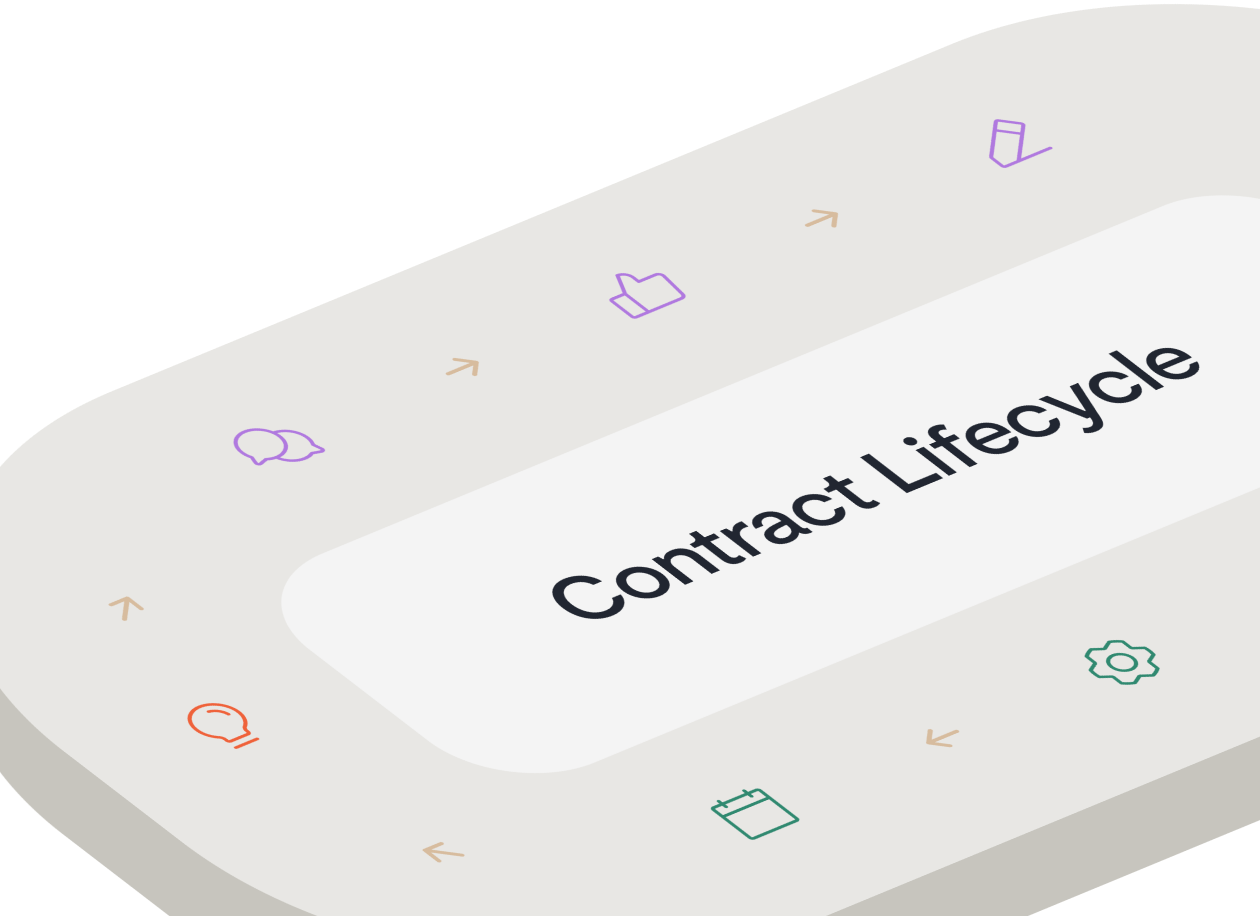
Here’s what typically happens: many organizations experience business losses caused by inefficiently managed contracts—Deloitte found average contract value erosion of 8.6%. In fact, organizations typically lose five to nine percent of annual revenue due to poor contract management, according to The 2025 Legal Operations Field Guide. Missed deadlines, forgotten renewals, and buried terms create real financial impact. The good news is that contract automation can solve the various issues arising from poorly managed contractual agreements—a sentiment shared by the 28% of legal professionals who identify contract review as their most impactful AI use case, according to The State of AI in Legal 2025 Report. This is specifically achieved by software such as Ironclad’s contract lifecycle management (CLM). This software streamlines the eight characteristic steps involved in the contract lifecycle management process. Those eight steps are:
- Creation
- Negotiation
- Approval
- Acceptance
- Fulfillment
- Analysis
- Optimization
- Renewal or termination
The contract management process can be complicated, disjointed, and messy, with contract data scattered across 24 different systems on average. Contracts rack up overhead legal costs while consuming valuable time with disorganized workflows.
Each step of a contract’s lifecycle matters. The intricacies can be tedious yet significant to your organization’s success.
Many businesses regularly lose thousands of dollars due to misinterpreted technicalities and vague legal jargon. Digitizing contracts can help you and your business model remain up to date with the latest technology. It also makes your contracts adaptable to new tides in the business and legal world. When everyone involved in a contract can collaborate easily, it makes retrieving relevant information undeniably smooth, all while minimizing costs and giving you more control over risks.
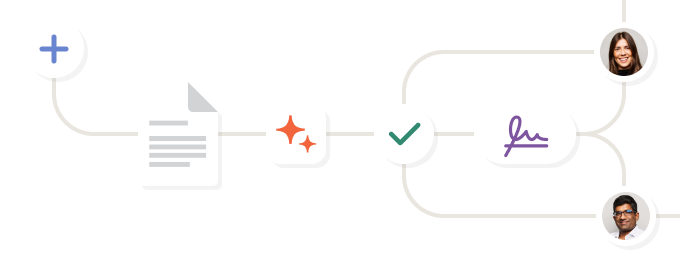
Ironclad’s CLM software helps businesses create, shape, access, and manage all contracts from a single platform. This centralized approach eliminates the inefficiencies and risks that come with scattered contract processes.
The platform delivers powerful, seamless functionality through user-friendly interfaces. Customizable workflows allow you to adapt the system to your specific business needs without technical complexity. It also lets you track the progress of your contracts during the execution and approval stages, which can consume significant legal department resources during the negotiation process. If you’re ready to step into the future of digital, streamlined contractual agreements, request a demo today.
Frequently asked questions about contractual agreements
What makes a contractual agreement legally binding?
For a contractual agreement to be legally binding, it generally needs to have a few key ingredients: an offer was made, that offer was accepted, both parties consented, something of value was exchanged (consideration), all parties were competent to make the deal, and the purpose of the agreement is legal. If any of these are missing, you might just have a simple agreement, not an enforceable contract.
Can a contractual agreement be verbal?
Yes, in many cases, verbal agreements can be legally binding contracts. The problem is proving they exist and what the exact terms were. Some types of contracts, like those for the sale of real estate, are required by law to be in writing. It’s always a better idea to get things in writing to avoid confusion and have a clear record of what everyone agreed to.
What happens if you break a contractual agreement?
Breaking a contractual agreement is called a “breach of contract.” When that happens, the party that was harmed can seek a legal remedy. This could mean suing for monetary damages to compensate for their losses, or in some cases, asking a court to force the other party to perform the duties they promised in the contract. The specific consequences usually depend on what the contract itself says and the nature of the breach.
Ironclad is not a law firm, and this post does not constitute or contain legal advice. To evaluate the accuracy, sufficiency, or reliability of the ideas and guidance reflected here, or the applicability of these materials to your business, you should consult with a licensed attorney. Use of and access to any of the resources contained within Ironclad’s site do not create an attorney-client relationship between the user and Ironclad.