












Procurement Contract Management: Not Just Legal’s Responsibility
Well-designed procurement contract management ensures that both the buyer and seller know that their wants and needs will be met every time.

Table of Contents
- What are procurement contracts?
- Types of procurement contracts
- The procurement contract management process
- Cross-functional roles in procurement contracting
- Why is my procurement contract management process so slow?
- Objectives of procurement contract management
- How to improve procurement contract management
- Upgrading to Ironclad
- Frequently asked questions about procurement contract management
Want more content like this? Sign up for our monthly newsletter.
Key takeaways:
-
Implement automated contract management systems to eliminate bottlenecks and standardize workflows, as best-in-class companies are 77% more likely to automate the contract lifecycle from beginning to end and 80% of procurement teams now use AI during contracting.
-
Monitor vendor performance actively throughout the contract lifecycle rather than filing agreements away after signing, using performance data and tracking tools to hold suppliers accountable and make informed renewal decisions.
-
Establish detailed contract parameters upfront including material specifications, delivery timelines, pricing structures, performance metrics, and acceptance criteria to prevent disputes and misunderstandings that slow execution.
-
Foster cross-functional collaboration between procurement, legal, finance, and department stakeholders throughout the contracting process, as each team plays a critical role and messy handoffs between teams create the bottlenecks that slow deals down.
Most procurement professionals have been there—drowning in vendor agreements, chasing down approvals, and watching time-sensitive deals stall while legal reviews pile up. You know contracts are critical to your business, but the process of managing them often feels designed to slow you down. With research estimating that 44% of legal work could be automated, it’s clear that traditional, manual processes are no longer enough to keep business moving forward.
At its core, procurement contract management is the systematic process of creating, negotiating, and overseeing agreements between buyers and suppliers. It ensures both parties understand their obligations, timelines, and deliverables throughout the entire relationship.
This process involves multiple stakeholders. The procurement, legal, operations, and HR teams all play crucial roles in moving contracts from initial request to final execution.
But here’s where things get complicated. Documents pass between teams, changes get conveyed, reviews pile up, and approvals create bottlenecks. Legal review—with its necessary attention to compliance and risk—often becomes the point where time-sensitive deals slow down.
So, how can you improve the process in your enterprise business and make sure everyone receives the right contracts on time?
The good news is that there are several proven ways to smooth the contracting process for all parties involved. Digital and automated contracting systems can simplify the entire procurement contract process, reducing bottlenecks and keeping everyone on track.
What are procurement contracts?
Procurement contracts are legally binding agreements between buyers and suppliers that define terms for purchasing goods or services. These contracts establish clear expectations for pricing, delivery, quality standards, and payment terms.
The management side of this equation is the process of overseeing these agreements from creation through completion. It sets legal and business expectations for working relationships between partners, vendors, or customers.
These agreements protect both parties while facilitating essential business activities. They govern material purchases, service delivery, payment schedules, and dispute resolution—protecting the heart of your organization’s supplier relationships.
They often pertain to relationships such as:
-
Selecting specific products or vendors
-
Vetting business partnerships
-
Establishing terms and conditions of payments between parties
-
Laying the foundation of contracts and product management once the project begins
Procurement contract management is essential, but it can also be time-consuming and complex. Issues in contract management often arise in the collaboration between teams. Whether you’re managing contracts for a small or large-scale enterprise, quality contract management requires attention, effort, and investment from all parties involved—as well as an effective system for communication across multiple teams and businesses.
Though the process can be challenging, taking the time to create quality procurement contracts sets both parties up for a healthy business relationship.
Types of procurement contracts
Understanding the different contract structures helps you choose the right approach for each supplier relationship. Common types of procurement contracts include:
Fixed price contracts
In a lump-sum or fixed-price contract, both parties will establish the terms surrounding the goods or services being exchanged, including fees and timelines. This type of contract allows both the buyer and vendor to clearly define their role and responsibility. Because of this, fixed-price contracts are very common and easy to manage.
Cost-reimbursable contracts
Also known as cost-control contracts, cost-reimbursable contracts require the buyer to cover the costs—both direct and indirect—of the work that is completed. As a result, the vendor will receive a fixed profit. This type of contract is riskier for the seller, who must pay for the cost upfront and only receives profit once it has been made. Because of the higher risk, these contracts are more complex and contain detailed terms surrounding fees and adjustments.
Time-and-materials contracts
The third type of procurement contract is designed for vendors who wish to be reimbursed for the time and money they have spent on a specific project. This is a popular choice for tech contracts that primarily cover time spent on a given project. These contracts require detailed parameters in regard to extensions, adjustments, and time-tracking.
The procurement contract management process
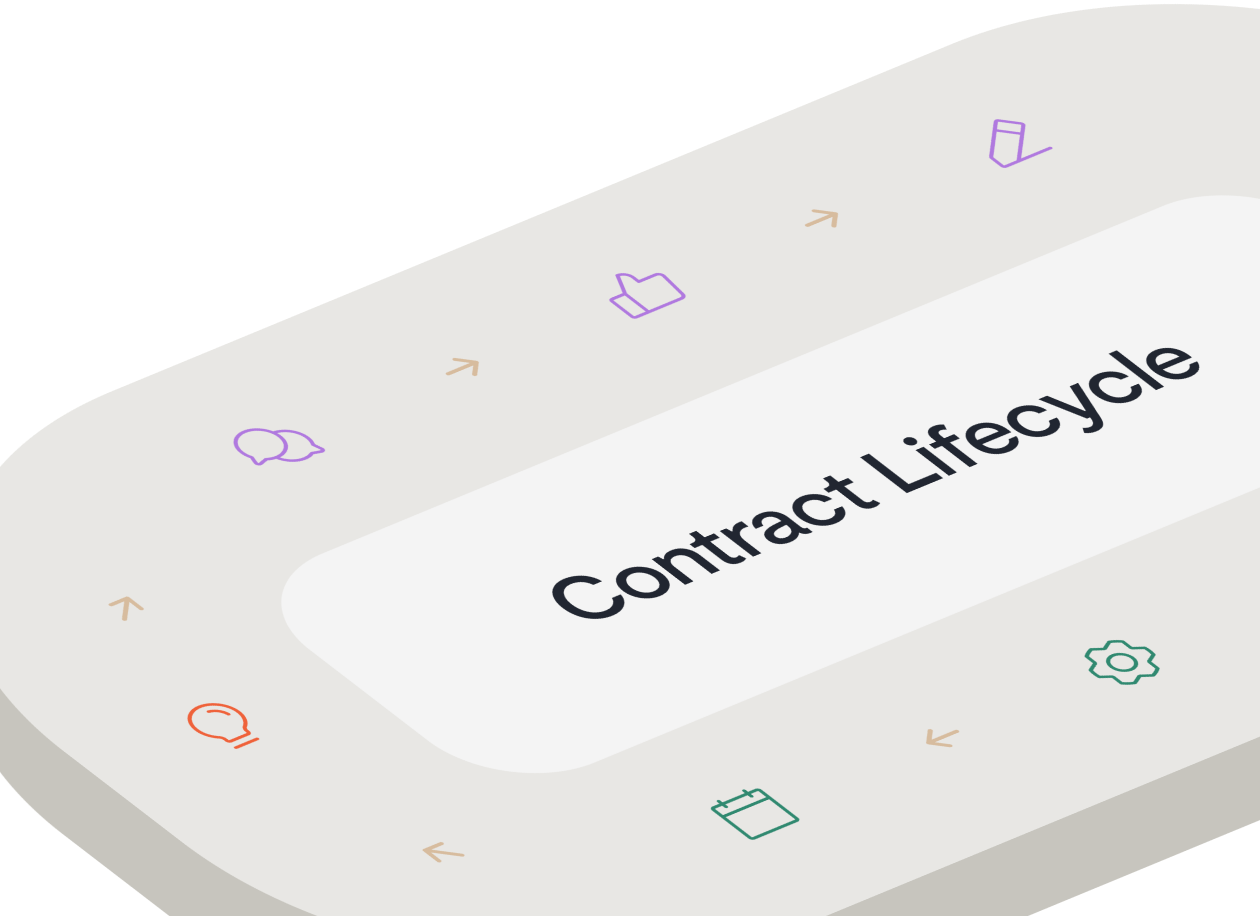
Procurement contract management isn’t a single event; it’s a whole lifecycle. If you’re trying to figure out where things are getting stuck, you have to look at the entire process. It usually breaks down into a few key stages.
Request and intake
It all starts when someone in the business needs something—software, services, you name it. They send a request, and this is your first chance to get it right. A good intake process uses a structured form to grab all the essential details upfront: what’s needed, the budget, and when they need it by. This avoids the endless back-and-forth emails trying to hunt down basic information.
Vendor selection and negotiation
Once you know what you need, the procurement team steps in to find the right supplier. While this has traditionally been a manual effort, Gartner estimates that 25% of all sourcing events will run fully autonomously by 2027, according to the GenAI for Enterprise Procurement Teams Guide. This is where you’re looking at proposals, checking references, and negotiating terms. You’re trying to find that sweet spot between a good price, solid quality, and a level of risk you can live with. This is less about squeezing every last penny and more about finding a partner who can actually deliver.
Drafting and review
Here’s where legal and procurement really need to be in sync. You take the business needs and the negotiated terms and turn them into a contract that actually protects the company. This means defining the deliverables, payment schedules, and what happens if someone doesn’t hold up their end of the deal. This stage can become a black hole if you don’t have a collaborative process.
Execution and performance monitoring
Getting the contract signed isn’t the end of the story. Now you have to make sure the vendor is doing what they promised. This means tracking deliveries, monitoring service levels, and making sure invoices are correct. If you just file the contract away and forget about it, you’re missing the whole point. This is where AI-powered tools can be a lifesaver, automatically flagging missed deadlines or deviations from agreed-upon terms.
Renewal or termination
As the contract term ends, you have a decision to make: renew, renegotiate, or walk away. You should be looking at the vendor’s performance data to make this call. Did they meet their obligations? Are the terms still competitive? This shouldn’t be a last-minute scramble. Research shows that best-in-class companies renew 32% more procurement contracts each year, and a good system gives you a heads-up months in advance so you have time to make a strategic choice.
Cross-functional roles in procurement contracting
Getting a procurement contract done right is a team sport. It’s a mistake to think it’s just procurement’s job or just legal’s problem. Everyone has a part to play, and when the handoffs are messy, deals slow down.
Procurement’s role
These are the people leading the charge. They’re responsible for finding the vendors, negotiating the business terms, and managing the supplier relationship. They own the ‘why’ behind the contract and make sure it aligns with what the business actually needs.
Legal’s role
Legal is your defense. Their job is to protect the company from risk. They’re the ones scrutinizing the fine print, making sure you’re compliant with regulations, and ensuring you have a way out if things go south. They translate the business deal into a legally sound document.
Finance’s role
Finance is all about the numbers. They look at the budget impact, set up the payment process, and track the spend. They’re the ones who can tell you if you’re actually getting the savings you negotiated or if you’re leaking money through off-contract spending.
Department stakeholders
These are the end-users—the people who will actually use the software or service. They’re the ones who know the real-world requirements. If you don’t involve them, you might sign a great-looking contract for a tool that nobody can actually use.
Why is my procurement contract management process so slow?
The importance of a good contract is clear, but you may still be left wondering why contracts are taking up so much of your team’s time. Whether you’re a buyer or seller, these are some of the most common pain points that may be causing bottlenecks in your process.
Unclear parameters
Unclear parameters slow down contract execution and create disputes later. When expectations aren’t explicitly stated upfront, both parties operate with different assumptions about deliverables, timelines, and costs.
Your procurement contracts need specific details on:
-
Material specifications and quality standards
-
Delivery timelines and fulfillment methods
-
Pricing structures and payment terms
-
Fee schedules and penalty clauses
-
Performance metrics and acceptance criteria
Without these clear parameters, you’ll spend time resolving disagreements instead of executing your business objectives.
Misused automation
Automation speeds up contract management, but poor implementation creates new problems. Templates that lack customization, workflows that skip necessary reviews, or systems that eliminate human oversight can lead to missed details and miscommunication.
Here’s the balance you need: automation should expedite repetitive tasks while preserving individual attention where it matters. Use it for document generation, approval routing, and deadline tracking. Keep humans involved for negotiation, exception handling, and relationship management.
A quality contract management system combines automated efficiency with the flexibility to handle unique circumstances and maintain direct communication between parties.
Lack of detail
Lack of detail creates misunderstandings that slow execution and damage relationships. Both parties need comprehensive information to fulfill their obligations and measure success.
Every procurement contract should include:
-
Sourcing roadmap: Clear processes for how materials or services will be procured and delivered
-
Negotiation documentation: Agreements reached on pricing, terms, and special conditions
-
Project management requirements: Detailed expectations for coordination, reporting, and milestone tracking
-
KPI definitions: Specific, measurable metrics that define successful performance
-
Term definitions: Explicit explanations of industry jargon or contract-specific language
-
Stakeholder guidance: Terms and conditions explained in language that non-legal teams can understand
-
Contract management blueprint: Step-by-step processes for handling the relationship as it unfolds
When these details are documented in your initial agreement, both parties can execute confidently and maximize the relationship’s value.
Objectives of procurement contract management
Good procurement contract management isn’t just about getting deals done faster. It’s about delivering real, measurable value to the business. When you’re trying to get buy-in for a better system, these are the outcomes that leaders actually care about.
Risk mitigation
This is the big one. A well-managed contract process reduces your exposure to everything from legal disputes to compliance fines, with best-in-class companies achieving 42% more compliant procurement transactions. When terms are clear and obligations are tracked, you’re not flying blind. You know where your risks are and you have a plan to manage them.
Cost control
This is about more than just negotiating a low price. It’s about preventing budget overruns, catching incorrect invoices, and making smart renewal decisions. Without a system to track this, companies leak money—a critical issue when a 2023 KPMG survey found that 84% of procurement leaders see inflationary pressure as a top external challenge. In fact, organizations lose an average of 8.6% of total spending annually to cost leakage in contracts, according to The 2025 Contracting Benchmark Report.
Operational efficiency
This means getting your team out of the weeds. When you automate the repetitive stuff—like routing approvals or chasing signatures—your people can focus on more strategic work. It’s about letting your high-skilled team do high-value work instead of administrative tasks.
Vendor performance optimization
A contract is a tool to manage a relationship. Systematically tracking whether vendors are meeting their service levels and deliverables is how you drive better supplier performance and build a foundation for fact-based conversations about results. It helps you hold suppliers accountable and identify who your true partners are.
How to improve procurement contract management
The reality is that legal teams struggle to keep up with the fast-moving pace of procurement. With ever-changing laws and complex compliance requirements, legal review—while absolutely essential—often becomes the bottleneck where time-sensitive deals slow down.
So how do you speed up the legal process while maintaining the integrity of your contracts?
Since procurement often involves multiple departments working on ongoing processes, it makes sense to simplify steps wherever possible. Digital contracting solutions can help improve your procurement process through automation, easy sharing, and instant approval tools. They can help alleviate extra workload for the legal team while empowering partner teams to self-service contracts, saving time and effort.
If you’re thinking about improving your business’s processes to expedite contract management in procurement, these practical steps can help move you in the right direction.
Advocating for a better system
To generate quality contracts, start by advocating for a better contract system.
Look for a system that’s both powerful and versatile. By incorporating a digital system that can handle multiple types of contracts, you will make the process more efficient across all teams.
Ironclad empowers all of your teams, from financial to legal to procurement. With a comprehensive digital contracting system, you can collaborate more effectively with your business partners and contracting teams to align and speed up the review and approval process. Ironclad offers powerful integrations that enable tracking, approval, and easy monitoring of purchases, relevant information, and important renewals that enhance the procurement process.
Ironclad makes it easy to track spending and approvals across multiple sources, suppliers, and departments. Ironclad unifies the contracting process through the use of a no-code workflow, open integrations with multiple enterprise resource planning (ERP) solutions, an intuitive contract data model, and more.
Implementing automated contracting
Automated contract workflows eliminate inconsistencies and reduce errors, which is why best-in-class companies are 77% more likely to automate the contract lifecycle from beginning to end. This shift is already well underway, as 80% of procurement teams now use AI during contracting, according to The State of AI in Procurement 2025 Report. Every contract follows the same routing rules, approval sequences, and documentation standards—creating consistency that manual processes can’t match.
Digital systems also create comprehensive audit trails. Ironclad for Procurement maintains accurate metadata on all contract terms and interactions, providing instant context for all parties while fostering trust through transparency.
Self-service capabilities shift routine work away from bottlenecks. When business teams can generate and approve standard contracts independently, legal can focus on complex negotiations and strategic initiatives. This improves productivity across all departments while maintaining appropriate oversight and controls.
Adopting a collaborative mindset
One of the cornerstones of a quality contracting system is a collaborative mindset. Digital contracting can help nurture collaboration by lowering the barriers of access to important data and approval tools. To help foster deep collaboration, Ironclad utilizes an ultra-secure company-wide repository that makes it easy for all users to gain important insight into contractual obligation, risk, and more on pending contracts.
Customers can use Ironclad’s Data Repository to search for contracts using custom filters. In addition, members of each team can quickly review documents without downloading them. This secure and convenient feature allows users to quickly ask and answer questions about discounts, renewals, contract details, and more.
Frequently asked questions about procurement contract management
What are the four types of procurement contracts?
The most common types you’ll run into are fixed-price, where the cost is set upfront; cost-reimbursable, where you cover the supplier’s costs plus a fee; time-and-materials, where you pay for hours and materials used; and unit-price contracts, where you agree on a price per item.
What are the 5 steps of contract management?
Think of it as five main phases: first is the request and intake; second is vendor selection and negotiation; third is drafting and review; fourth is execution and performance monitoring; and fifth is handling the renewal or termination.
What is the role of a contract manager in procurement?
A contract manager in procurement is the person who shepherds a contract through its entire life. They work with legal, finance, and the business teams to make sure the contract meets everyone’s needs, is compliant, and delivers the value you expect while keeping risk in check.
Ironclad is not a law firm, and this post does not constitute or contain legal advice. To evaluate the accuracy, sufficiency, or reliability of the ideas and guidance reflected here, or the applicability of these materials to your business, you should consult with a licensed attorney. Use of and access to any of the resources contained within Ironclad’s site do not create an attorney-client relationship between the user and Ironclad.