















Table of Contents
- What is the contract approval process?
- Stages of the contract approval process
- Types of approval models for contracts
- Why contract approvals get stuck
- How to streamline the contract approval process
- How AI accelerates contract approval processes
- How to continue improving the contract approval process
- Getting started with better contract approvals
- Frequently asked questions about contract approval processes
Want more content like this? Sign up for our monthly newsletter.
Key takeaways:
Implement tiered approval models based on contract value and risk level to ensure senior leadership focuses on high-stakes agreements while empowering teams to handle routine contracts independently.
Standardize contract templates with pre-approved clauses to eliminate repetitive review work and reduce average approval times by up to 50% or more.
Centralize contract collaboration in a single platform to eliminate version control chaos, missed handoffs, and email chains that delay approvals.
Track approval process metrics like average completion time and bottleneck locations to identify improvement opportunities and ensure your workflow remains efficient as your organization scales.
As a contract manager or in-house counsel, you may often find yourself stuck in the contract approval process. That’s because this stage of the contract management lifecycle is often more complicated than it needs to be—there are too many people and opinions involved and not enough transparency. Above all, the process itself can often be disorganized and confusing, particularly if you’re not using premier contract management software.
With 83% of legal departments expecting demand to increase, mastering the contract approval process transforms legal teams from bottlenecks into a strategic advantage for the business. When you streamline approvals, you stay on top of your work, organize contracts better, and ensure agreements meet the right targets. By simplifying the process, you’ll close deals faster while reducing friction across teams.
Read on to learn more about the contract approval process. By the end of this article, you’ll understand the stages involved, the different approval models you can use, why approvals get stuck, and how to streamline the whole thing with the right tools and approach.
What is the contract approval process?
The contract approval process is the stage where stakeholders review and authorize agreements before execution. It happens after contract creation and negotiation and before contract execution, serving as the final checkpoint before contracts become binding.
This process involves reviewing contracts to confirm all parties have weighed in and identifying which departments or stakeholders still need to approve them. The challenge? It can be incredibly time-consuming—Master Services Agreements (MSAs) take an average of 60 days to execute, according to The 2025 Contracting Benchmark Report—and it’s often a disorganized mess involving many people and opinions. World Commerce & Contracting estimates poor contract management costs companies up to 9% of annual revenue.
Without a centralized platform to keep everyone on the same page, common problems emerge:
- Accidentally emailing colleagues an older version of the contract
- Skipping over typing a stakeholder’s email so they don’t receive the contract at all
These kinds of coordination breakdowns compound quickly. Your colleagues may also confuse the version of the contract from last week with the most recent version you just emailed. As a result, many of your colleagues may fall behind on the negotiation process, leading to miscommunication, delays, and even lawsuits.
That’s why you should use an advanced contract lifecycle management (CLM) platform like Ironclad to make sure all parties are up-to-date about what needs to be done before contract approval. By streamlining and improving the contract approval process, Ironclad’s powerful DOCX native collaborative platform and Workflow Designer will help you organize your contracts, create standardized contracts and templates, keep everything transparent, and more.
Stages of the contract approval process
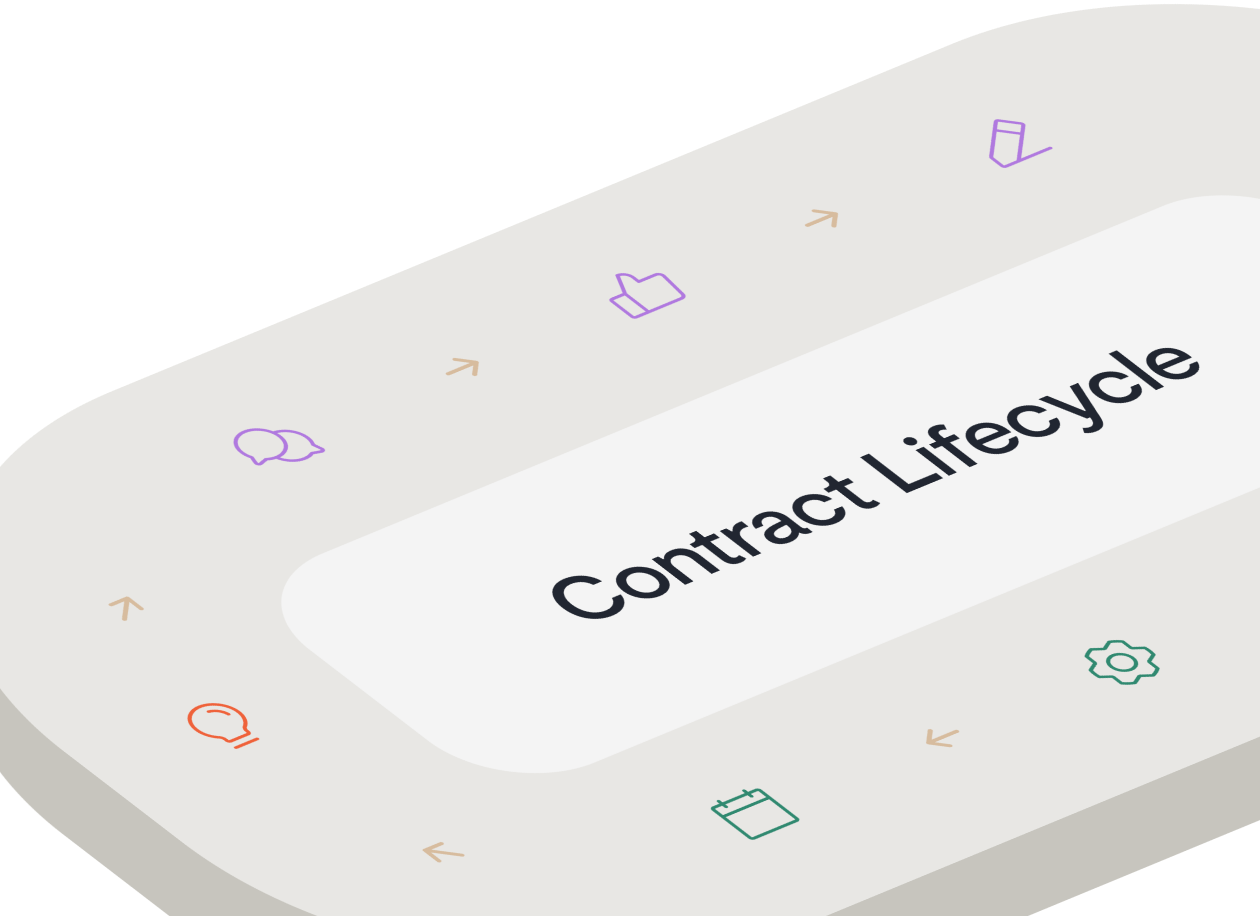
Let’s be honest—if you don’t have a clear map, you’re going to get lost. The same goes for contract approvals. While every company is a little different, the approval process usually follows a few key stages. Think of it less like a rigid checklist and more like a series of handoffs to get a contract over the finish line.
Drafting and review
This is where it all starts. Someone—usually in sales or procurement—needs a contract. They either grab a template or, if it’s a third-party paper, upload it. The first pass of review happens here. Is all the basic information correct? Does it align with the deal terms discussed? This is the initial gut check before it goes any further.
Internal review and collaboration
Once the draft looks okay, it starts making the rounds internally. This is where the real fun begins. Legal needs to check for risk, finance needs to verify payment terms, and maybe a department head needs to sign off on the scope. Without a system, this stage is a mess of email chains and conflicting feedback. With a good process, everyone can comment and redline in one place, so you’re all working from a single source of truth.
Negotiation with the counterparty
After your internal team is aligned, you send the contract to the counterparty. They’ll have their own review process, which usually leads to redlines and questions. This back-and-forth can be quick or it can drag on for weeks. The key is keeping track of versions and making sure your internal stakeholders approve any significant changes.
Final approval
Once both sides agree on the terms, the contract comes back for one last internal blessing. This is the final go/no-go decision. Depending on the contract’s value or risk level, this might require an executive signature. This step ensures that what was negotiated still has the final green light from all necessary internal approvers before it’s signed.
Execution
This is the finish line. The final, approved contract is sent out for signatures. Once all parties have signed, the contract is officially active. A good process doesn’t just stop here—it automatically stores the executed agreement in a central repository where it can be easily found later.
Types of approval models for contracts
Not every contract needs to go to the GC for a signature. That would be a nightmare. Smart teams use different approval models based on what the contract is. It’s all about matching the level of review to the level of risk.
Role-based approvals
This is the most straightforward model. Approvals are routed based on someone’s job title or function. For example, all IT contracts go to the head of IT, all sales contracts above a certain value go to the VP of sales, and legal reviews everything with an indemnification clause. It’s predictable and easy to manage, as long as people are in their roles.
Amount-based approvals
This one is all about the money. The higher the contract value, the more senior the approver. A $5,000 software purchase might only need a manager’s approval, but a $500,000 agreement will likely need a sign-off from the CFO. This is a great way to keep executives focused on high-value deals while empowering teams to handle smaller, routine agreements on their own.
Risk-based approvals
This is a more sophisticated approach. Instead of just looking at the dollar amount, you’re evaluating the contract’s overall risk. A contract with non-standard data privacy terms, unlimited liability, or a long termination notice period would be considered high-risk, even if the dollar value is low. These contracts get automatically escalated to legal or senior leadership for a closer look. This ensures your most experienced people are spending their time on the things that can actually hurt the company.
Why contract approvals get stuck
Ever feel like your contracts go into a black hole? You send an agreement out for approval and then…crickets. You’re not alone. Most of the time, approvals stall for a few very common, very human reasons.
Unclear ownership
When no one knows who is supposed to do what next, nothing happens. Is legal supposed to review it first, or finance? Who is the ultimate decision-maker? If the process isn’t clearly defined, everyone assumes someone else is handling it. The contract just sits there, waiting for a hero.
Too many approvers
Sometimes, in an effort to be inclusive, we invite too many people to the approval party. When you have seven different people who can approve a contract, you often get seven different opinions and a lot of delays. A streamlined process has the minimum number of necessary approvers, not every single person who has ever touched the deal.
Version control chaos
This is a classic. You’re getting feedback on version two, but your colleague is redlining version three, and the counterparty just sent back their changes to version one. When people are working off different documents, you spend more time figuring out which version is the ‘real’ one than you do actually approving the contract.
Lack of visibility
If you can’t see where a contract is in the approval process, you can’t fix it. Is it sitting in someone’s inbox? Did they even open the email? Without a central dashboard to track progress, you’re stuck sending ‘just checking in’ emails, which nobody loves.
How to streamline the contract approval process
Organize your contracts
Contract organization starts with recognizing that not every contract needs the same approval process. Different contract types carry different risk levels and require different stakeholder involvement.
Here’s where it gets challenging: when you’re managing hundreds or thousands of agreements, you won’t have time to read every contract individually to determine which approval path it should follow. You need a system that can automatically categorize and route contracts based on their characteristics.
This is where a searchable contract repository becomes essential. Our dynamic Data Repository is a centralized digital hub where you can place all of your contracts, making the process of locating and organizing important contract metadata easier and faster than ever, zero training required. This eliminates the need to search for contracts across your email, local storage, cloud storage, or even physical filing cabinets. With Ironclad, you can bring in contracts from anywhere and use the Data Repository’s advanced search functions to locate contract information within seconds.
Our Data Repository also gives you the ability to put your contracts’ rich metadata to work. Ironclad automatically sorts your contracts by metadata, so you can organize them into different groups (i.e., by storage guidelines, renewal date, naming conventions, etc.). This way, you will save a lot of time and energy that you can use for tasks that specifically require your legal expertise and knowledge.
Create standardized contracts and templates
Standardized contracts and templates eliminate repetitive work while ensuring consistency across all agreements. When you start from a template instead of a blank page, many approval decisions have already been made upfront, which cuts down on review time.
With Ironclad’s Workflow Designer, you can:
- Create and modify templates for all types of contracts, from HR to shipping and more
- Craft workflows without the need for manual review
The Workflow Designer is a codeless tool with an intuitive drag-and-drop user interface. You can set up contract templates and standardized contracts with just a couple of clicks. All you have to do is set up a template, tag any fields that need to be provided, add signers and approvers, and approve it. After that, you can just automate the approval process.
Our reliable boilerplate clauses and legal language will also help you and your team to ensure 100% compliance with legal requirements and organization policies without manual review. That way, you won’t miss including key clauses, which often happens when you reuse existing clauses from older contracts instead of using templates.
Without templates, contract negotiation can take up a lot of your time because each party is negotiating to minimize legal, financial, and operational risk and get the best terms. Parties often stretch out the approval process, especially if there are delays in contract creation, review, and execution due to miscommunication and lack of coordination between the parties. Templates, however, already come with a lot of standardized clauses and terms, so the parties can spend more time on the actual substance of legal documents.
Collaborate with colleagues so everyone is on the same page
Effective collaboration during approvals is different from negotiation with external parties. While negotiation focuses on reaching agreement with the counterparty, collaboration ensures your internal stakeholders stay aligned throughout the approval process. When your internal team isn’t coordinated, even simple contracts can get delayed by conflicting feedback or missed handoffs.
This kind of internal coordination builds transparency into the contract approval process, ensuring compliance and consistency while reducing the burden of reviewing, negotiating, and approving contracts.
Ironclad’s DOCX native collaborative platform makes this coordination seamless:
- Edit and redline comments effectively and efficiently: Unlike traditional contract management platforms, Ironclad allows you to edit, accept and reject tracked changes, redline, and comment on DOCX files in real-time, eliminating the need for emailing copies of your contract to your colleagues.
- Keep in touch with your colleagues in real-time: Like Google Docs, Ironclad gives you the ability to loop in colleagues using internal comments and @mentions. This saves you the time and energy you would normally spend on attaching the newest version of the contract to an email and waiting for a response.
How AI accelerates contract approval processes
You’re hearing about AI everywhere, and for good reason—a Gartner survey found 36% of GCs are prioritizing AI adoption and contract analytics, and The State of AI in Procurement 2025 Report found that 80% of procurement teams already use AI during contracting. When it comes to contract approvals, it’s not about replacing people—it’s about making them faster and smarter. Think of it as giving your team superpowers.
AI can instantly review a third-party contract and flag any clauses that don’t match your standard playbook. Instead of a lawyer spending an hour reading every line of a routine NDA, they can spend five minutes just looking at the three clauses AI flagged as risky. This is a huge time-saver.
It can also make your approval routing more intelligent. For example, AI can identify that a contract contains specific data processing language and automatically add the head of information security to the approval workflow. No more guessing or forgetting who needs to be involved. It just happens.
What’s more, Ironclad is powered by leading AI technology from our partner, Google Cloud AI. This means that you’ll be able to use our AI models to help you create standardized contracts and templates. As the only contract management system (CMS) to partner with Google Cloud AI, Ironclad offers powerful AI models that work straight out of the box, with no training required. Use them on any contract you’re working on—they will automate all of the everyday contracting work for you and your team, giving you more energy to focus on demanding tasks such as negotiation.
The result is that your team spends less time on manual, repetitive tasks and more time on strategic work. The low-risk contracts move quickly through the process, and the high-risk ones get the expert attention they deserve, faster.
How to continue improving the contract approval process
Continuous improvement prevents your contract approval process from becoming outdated as your organization scales. Even well-designed workflows need regular optimization to remain effective and continue providing clear benefits.
The key to meaningful improvement is visibility into how your approval process actually performs. Without clear metrics, you’re just guessing at what needs to be fixed. Ironclad’s analytics software provides the visibility you need to track performance and identify improvement opportunities. You can keep projects on schedule and ensure you’re meeting business goals with data-driven insights.
Process Metrics Reporting reveals exactly where time gets spent in your approval workflows. With our Data Repository’s Process Metrics Reporting tool, you can view, generate, and create reports of important metrics such as:
- How long it takes to approve the average contract
- How long it takes to complete a certain type of contract (e.g., an HR contract)
- How many contracts are waiting to be approved and for how long
Through Process Metrics Reporting, you and your team will be able to measure the success of your contracts. Without these metrics, you won’t be able to quantify how far behind or ahead you are of your goals, which will make it difficult for you to streamline the contract approval process and use your time better. These metrics will also help you to gain deeper insight into how your team works and if there are any aspects of the contract approval process that need further refinement or fixing.
Getting started with better contract approvals
Fixing your contract approval process isn’t a one-and-done project. It’s about building a system that makes life easier for everyone, from the sales rep who needs an NDA to the GC who needs to report on risk. By defining your stages, using smart approval models, and leveraging technology to automate the busywork, you can turn your approval process from a bottleneck into a way to speed up deals and projects.
The key is to start. You don’t have to boil the ocean. Pick one contract type that’s causing a lot of pain and streamline its approval workflow. Once you show how much faster and smoother things can be, you’ll have the momentum you need to tackle the rest.
Ironclad transforms contract approvals from time-consuming bottlenecks into an efficient process that helps your business move faster. In fact, organizations using the platform see an average 55% improvement across key performance metrics, according to the report. With an intuitive Workflow Designer, a Data Repository, and a DOCX native collaborative platform, you gain the tools to master the contract approval process.
Ready to reduce contract processing time by 80%? Request a demo today to see how Ironclad streamlines approvals while our dedicated deployment team ensures you maximize every feature from day one.
Frequently asked questions about contract approval processes
What’s the difference between contract stages and approval stages?
It’s easy to mix these up. ‘Contract stages’ refer to the entire lifecycle of a contract—from creation, negotiation, and execution all the way to renewal or termination. ‘Approval stages’ are a specific part of that lifecycle. They are the internal steps a contract must go through to gain approval before it can be signed.
How long should a typical contract approval process take?
That’s a question every team asks. The honest answer is, it depends. A standard, low-risk NDA using a template might be approved in a few hours. A complex, high-value MSA with a new vendor could take weeks. The goal isn’t a specific number of days; it’s to make the process as efficient as possible for each type of contract. With a streamlined workflow, many companies see their average approval times cut by 50% or more.
Who should be involved in contract approvals?
The short answer is: as few people as necessary. Your core approvers should always include someone from legal to check for risk and someone from finance to check the numbers. Beyond that, you should only add people who have direct responsibility for the contract’s subject matter, like a department head for a major software purchase. Avoid adding ‘optional’ or ‘FYI’ approvers, as that just creates confusion and delays.
When should I use automated approval workflows?
You should use them as soon as you find yourself managing more than a handful of contracts. If you’re dealing with repetitive agreements like non-disclosure agreements (NDAs), sales order forms, or vendor contracts, automation is the clear choice. It’s perfect for high-volume, low-risk work. This frees up your legal team to focus their expertise on the unique, complex agreements that actually require strategic thinking.
Ironclad is not a law firm, and this post does not constitute or contain legal advice. To evaluate the accuracy, sufficiency, or reliability of the ideas and guidance reflected here, or the applicability of these materials to your business, you should consult with a licensed attorney. Use of and access to any of the resources contained within Ironclad’s site do not create an attorney-client relationship between the user and Ironclad.