













Table of Contents
- Meet the GC who created the universal NDA
- Bitmovin’s contracting problem
- Understanding the NDA challenge
- Confronting the risk of automation
- Creating the first universal NDA
- Using Workflow Designer to implement the UNDA
- Bitmovin’s results
- Build your own universal agreement
Want more content like this? Sign up for our monthly newsletter.
Key takeaways:
-
Standardize high-volume, low-variation contracts by creating core clauses with limited variations (such as 13 clauses with 1-3 options each) to eliminate custom drafting in 99% of cases and reduce review costs from hundreds of dollars per contract.
-
Implement automated workflow tools that guide users through qualifying questions to generate the correct contract version, enabling sales teams to execute standard agreements independently and routing only non-standard requests to legal review.
-
Identify automation opportunities by evaluating where losses occur in your contracting process—pre-transaction deal failures versus post-transaction liability—to determine which high-volume agreement types present acceptable automation risk.
-
Apply the universal agreement methodology beyond NDAs to other repetitive contract types in your organization, starting with agreements that show consistent meaning despite varying language across counterparties.
The universal NDA (UNDA) standardizes non-disclosure agreements to eliminate weeks of negotiation and legal review. Ken Carter, general counsel at Bitmovin, created the world’s first universal NDA that accounts for 99% of typical NDA scenarios while significantly reducing contract review time.
This article shows you how Bitmovin automated their NDA process using Ironclad’s Workflow Designer. You’ll see the exact steps they took to move from manual contract reviews to automated self-service agreements that sales teams can execute independently.
Meet the GC who created the universal NDA
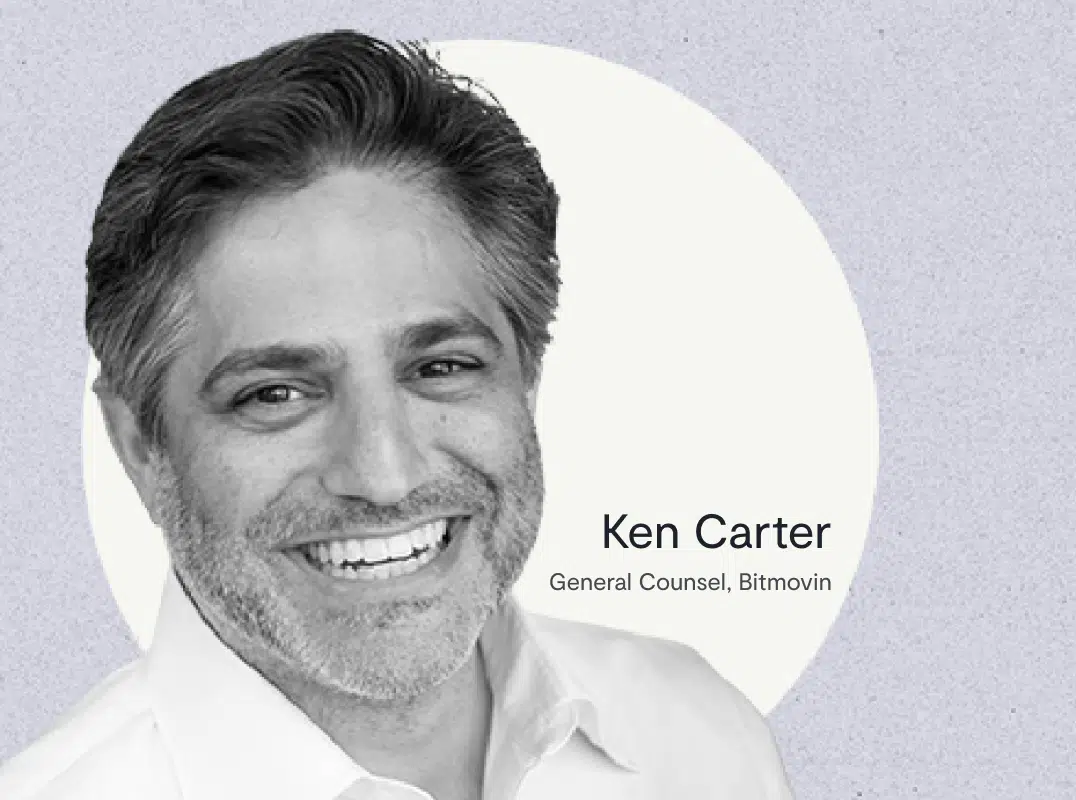
Ken Carter created the world’s first universal NDA while serving as general counsel at Bitmovin. His innovation standardized a contract type that typically requires extensive legal review and turned it into a self-service process.
Carter brings 20+ years of experience across high-tech enterprises, cybersecurity, telecommunications, software, and digital media law. He holds both a JD and MBA and was named General Counsel of the Year in 2016.
Before Bitmovin, Carter led legal teams at Cloudflare, Inc. as counsel and head of legal, public policy, and trust and safety. He also served as public policy and government affairs counsel at Google. This background in fast-moving tech companies shaped his approach to contract automation.
Bitmovin’s contracting problem
Bitmovin’s target market is Over the Top Television (OTT) providers, which are companies that have a large catalog of video content that they want to distribute online.
Their business model depends on speed. Bitmovin helps distributors save money by reducing the cost of ownership, which means they need to shorten the sales cycle and close deals as quickly as possible to deliver value immediately.
NDA negotiations became a bottleneck. With each NDA costing $114 to $456 to review and negotiate, going back-and-forth with customers over contract terms put transactions at risk for both parties and delayed product delivery and customer savings.
Contract volume grew with the company, but manual review didn’t scale. Bitmovin’s lean legal team couldn’t manually review every contract as deal velocity increased.
Carter discovered a pattern through hundreds of NDA reviews. While the language varied across different NDAs, the actual meaning remained remarkably consistent—a finding supported by research showing 80% of NDA negotiations are a time waste. In his entire career, he had only encountered a few NDAs he couldn’t sign.
My attitude changed dramatically, from like, ‘Let me negotiate every single deal,’ to ‘Can I engineer myself out of a job? Can I build a system that is so efficient that I don’t even have to come into the office?”
Ken Carter general counsel, Bitmovin
Understanding the NDA challenge
To understand Carter’s breakthrough, you need to know why NDAs create such persistent bottlenecks. A non-disclosure agreement (NDA) is a legal contract that creates a confidential relationship between parties who need to share sensitive information. NDAs protect proprietary data, trade secrets, and confidential business information from unauthorized disclosure.
These agreements appear throughout business relationships. Companies use NDAs at the beginning of partnerships, during due diligence processes, and in conjunction with sales agreements, employment contracts, and vendor relationships. The widespread use of NDAs makes them one of the most common contracts legal teams handle. It also makes them a prime candidate for bottlenecks; The 2025 Contracting Benchmark Report reveals that NDAs originate on counterparty paper 90% of the time, forcing legal teams into constant review cycles.
Confronting the risk of automation
Carter’s pattern recognition led to a fundamental question about automation. Lawyers resist automation because they’re trained to be risk averse—a tendency confirmed by The State of AI in Legal 2025 Report, which found that while 35% of legal professionals trust AI to flag risky clauses, only 22% trust it to replace them. The key to overcoming this hesitation is understanding exactly where potential losses might occur in the contracting process.
Contract risk appears at two critical moments. Loss can happen before a transaction closes or after it’s complete.
Sales teams fear pre-transaction losses. They worry that stubborn legal terms and too many contract revisions will kill deals before they close.
Legal teams fear post-transaction losses. They know that agreeing to bad terms can create problems that surface months or years later, damaging the company far more than a lost deal.
Carter reframed the automation question. Instead of asking whether to automate, he asked “What are we going to optimize between these two options?” and “Can we change the efficiency frontier?”
The results of this shift in thinking excited him so much that he created and shared this meme on LinkedIn:

Creating the first universal NDA
With this risk framework in place, Carter easily identified NDAs as the perfect target for optimization. “Most NDAs say the same thing, with the exception of a few clauses,” Ken said. “I was struck by the thought of, what if we could model this on the creative commons approach?”
Creative commons licenses provided the model. This system takes 400 years of copyright laws and distills them into seven essential licenses that cover most use cases.
Carter partnered with UC Hastings law school interns to test his theory. The team read hundreds of NDAs and interviewed 25 general counsel to understand common patterns and variations.
The research produced the first draft of a universal NDA. The standardized agreement includes 13 core clauses, with each clause offering one to three variations depending on the business context.
This flexible structure generates 192 different NDA versions. These variations account for 99% of the instances where companies need an NDA, Carter said, eliminating the need for custom drafting in most situations.
Using Workflow Designer to implement the UNDA
Creating the standardized terms was only half the solution. Carter also needed a way to deliver the right version of the UNDA to users without overwhelming them with choices. This is where Ironclad’s Workflow Designer transformed the concept into a practical system.
Creating a workflow
Workflow Designer eliminated the complexity of managing 192 NDA variations. Instead of distributing dozens of templates or expecting users to choose the right version, Ken created a guided self-service process.
The workflow uses multiple choice questions to generate the correct contract. Business users answer a series of questions that automatically customize the NDA to their specific situation.
The first question asks about the business purpose for the contract. The user’s answer determines which conditional clauses appear in the final agreement.
Negotiation
The workflow handles negotiation through alignment questions. Users see questions like “Do you agree to this definition of a business purpose?” that let them negotiate with counterparties directly through the form instead of involving legal counsel.
Sales reps can address unique requirements without legal review. If a counterparty wants something specific within the contract, the sales rep handles it through the workflow form rather than escalating to Carter.
The system routes contracts based on alignment. When counterparties answer “Yes” to all alignment questions, the agreement automatically advances to signature. When answers indicate misalignment, the contract routes to legal for additional review.
This filtering system protects Carter’s time. He focuses on contracts that truly need legal expertise while standard agreements flow through automatically.
Ken maintains oversight and flexibility. He can jump into any workflow to collaborate internally or with counterparties when needed, but most contracts complete without his involvement.

Chatbot
Ken extended automation beyond the workflow with a Slack chatbot. The bot guides sales reps to the right contract form without requiring legal support for basic questions.
The chatbot asks qualifying questions to determine the right form. It prompts users with questions like “What’s the status of the customer?” or “Are we selling our services?” based on the context.
The bot automatically generates the correct Ironclad link. Based on the user’s answers, it provides a direct link to the appropriate contract workflow, eliminating the need to search through forms or ask legal which template to use.
Bitmovin’s results
The universal NDA transformed Bitmovin’s contracting process within six months. This level of impact mirrors broader data from the report, which found an average 55% improvement across value metrics for organizations using Ironclad. The company launched over 100 workflows using the automated contract, with most using the standard version that requires no modifications.
The standardized approach proved robust enough for high-stakes situations. Bitmovin and their investors used the UNDA version during their Series C fundraising process.
Carter’s workload changed dramatically. “NDAs are not quite a weekly thing for me anymore. Previously, I saw them daily, or multiple times daily. It really reduces my workload. And for things that we—that I—don’t want to do,” Carter said of the automated UNDA’s success.
Build your own universal agreement
Carter’s success at Bitmovin proves that even small legal teams can eliminate contract review bottlenecks by standardizing high-volume agreement types—an approach that 84% of legal professionals foresee becoming the norm. Their lean team eliminated NDA bottlenecks by standardizing terms and automating them through self-service workflows in Ironclad’s Workflow Designer. The same approach works for any high-volume, low-variation contract type in your organization.
“It’s so automated that I don’t worry about it,” Carter said. “If we can build a network based on universal NDAs, a standard, what else could we use that approach for?”
You can apply this standardization approach to your repetitive contracts. Start by identifying your highest-volume agreement types, then build workflows that guide users through the right variations without requiring legal review. Request a demo today to see how Workflow Designer can transform your contract process the way it did for Bitmovin.
Ironclad is not a law firm, and this post does not constitute or contain legal advice. To evaluate the accuracy, sufficiency, or reliability of the ideas and guidance reflected here, or the applicability of these materials to your business, you should consult with a licensed attorney. Use of and access to any of the resources contained within Ironclad’s site do not create an attorney-client relationship between the user and Ironclad.